Nobody loves the annual gutter chore — and in the Upstate, where pines and oaks fill our gutters faster than most of the country, it comes around more than once a year. The good news: for a lot of Greenville homes you don't actually need to climb a ladder to get the job done. Ground-level tools let you clear leaves, needles and grit while keeping both feet planted safely on the lawn.
Below are the five best ways to clean gutters without a ladder, plus honest pros and cons for each, so you can pick the right tool for your home — and know when it's smarter to call in a crew.
Why skip the ladder in the first place?
Ladder falls are one of the most common home-maintenance injuries, and gutters make it worse: you're reaching sideways, on soft ground, often on a slope, with wet leaves underfoot. In our humid Upstate climate that ladder footing is rarely as solid as it looks. Cleaning from the ground removes the single riskiest part of the whole chore.
- Most single-story Greenville homes can be cleaned entirely from the ground with the right tool.
- Leaf-blower attachments and vacuum kits handle bulk debris; hose and wand tools handle the flush and finish.
- Two-story homes are harder to clean blind from below — often a job for a pro.
- The only way to stop cleaning altogether is to keep debris out with micromesh guards.
Method 1: Leaf-blower gutter attachment
A curved gutter-cleaning attachment clips onto the end of most leaf blowers and lets you blast debris out of the trough from ground level. It's the fastest way to move a big pile of dry leaves, pine needles and twigs — exactly the mix that builds up under Upstate oaks and loblolly pines.
- Best for: heavy, dry buildup after a fall leaf drop or a summer storm.
- Pros: clears the bulk quickly; no lifting; inexpensive attachment for a blower you likely already own.
- Cons: struggles with wet, compacted debris; too much force can dent thin gutters or blow shingle grit around. Keep a rake handy for the mess that lands on the lawn.
Method 2: Wet/dry vacuum kit
A wet/dry (shop) vacuum fitted with a gutter-cleaning extension kit reverses the leaf-blower idea: instead of blasting debris out, you suck it in — including standing water. Long hose kits are sold and rented, and some claim to reach a second-story roofline.
- Best for: soggy, half-rotted debris and gutters holding water after Upstate downpours.
- Pros: strong suction pulls out both debris and standing water; no pile left on the lawn to rake.
- Cons: the vacuum and extended hose get heavy and awkward to steer overhead; twigs and wet leaf clumps can jam the hose.
Method 3: Telescoping wand & tongs
Telescoping (extension) poles connect in modular sections and can reach roughly 30 to 40 feet. Fit them with a gutter scoop, a stiff brush or a set of grabbing tongs and you can physically pull debris out of hard-to-reach runs — including many second-story gutters — without ever leaving the ground.
- Best for: spot-clearing clogs and reaching gutters over decks, sunrooms or landscaping where a ladder won't sit.
- Pros: great reach; the tongs and scoops physically remove clumps rather than just moving them; nothing to plug in or charge.
- Cons: slow and tiring at full extension; you're working blind from below, so it's hard to confirm the gutter is truly clear.
"From the ground you can move most of the debris — but you can't see the corners, the seams or the downspout openings. That blind spot is where clogs hide."
— Upstate LeafFilterMethod 4: Garden-hose gutter wand
A garden-hose gutter wand is a rigid pole with a curved, angled nozzle that arcs the water down into the trough. It turns your standard hose into a ground-level flusher, pushing loosened debris toward the downspouts. Think of it as the finishing step after a blower or vacuum has done the heavy lifting.
- Best for: rinsing out the last of the fine grit and flushing debris toward downspouts.
- Pros: cheap, convenient and easy — most wands adjust so you can aim the stream from the lawn.
- Cons: weak on tightly packed clogs; overspray can drive water behind the fascia and soffit, which invites the wood rot our humidity already encourages. Aim into the gutter, not the roof edge.
Method 5: Pressure washer
For gutters that have been neglected a season too long, a pressure washer with a gutter-cleaning attachment blasts out caked-on dirt, hardened muck and even clogged downspouts. It's the heavy artillery of ground-level cleaning — powerful, but messy.
- Best for: long-neglected gutters with packed, crusted debris and stubborn downspout clogs.
- Pros: powerful enough to clear what a blower or hose can't; great for reopening blocked downspouts.
- Cons: genuinely messy — wear work clothes and plan to rinse the siding afterward. Too much pressure can loosen seams, and splashback near the ground can catch you off guard.
- Start with a leaf-blower attachment or vacuum to remove the bulk of the debris.
- Use telescoping tongs to pull out any packed clumps the blower left behind.
- Finish with a hose wand to flush fine grit toward the downspouts.
- Watch the downspout outlets to confirm water actually reaches the ground.
When to hire a pro instead
Ground-level tools are excellent on single-story ranches and easy runs. But on two-story Greenville homes — or any gutter you can't clearly see into from below — cleaning blind from the lawn often leaves clogs behind, especially at the corners and downspout openings.
A professional crew clears the gutters and the downspouts, inspects for sags, loose hangers and leaking seams while they're up there, and hauls the debris away. Pros also wear proper roofing shoes that won't scuff or loosen the grit on asphalt shingles the way regular soles can. For many homeowners in Greer, Simpsonville and Easley, one professional visit a year beats an afternoon of fighting a 40-foot pole.
Rather have someone else handle the ladder work?
Our local Upstate crews clean, clear and inspect your gutters top to bottom — then show you how to make it the last cleaning you'll need. Get a free on-site quote.
Ground-level safety tips
Staying off the ladder removes the biggest risk, but ground-level cleaning still has its own hazards. A few minutes of caution keeps a chore from becoming an emergency:
- Wear safety glasses. Blowers, vacuums and hoses send debris straight down toward your face.
- Mind the power lines. A 40-foot telescoping pole reaches overhead service lines easily — look up before you extend.
- Never climb onto the roof. Shoe tread loosens the grit on asphalt shingles and weakens them over time.
- Watch for splashback. Pressure washers and hose wands can throw water and grit back at you, especially on a two-story reach.
The permanent fix: stop cleaning altogether
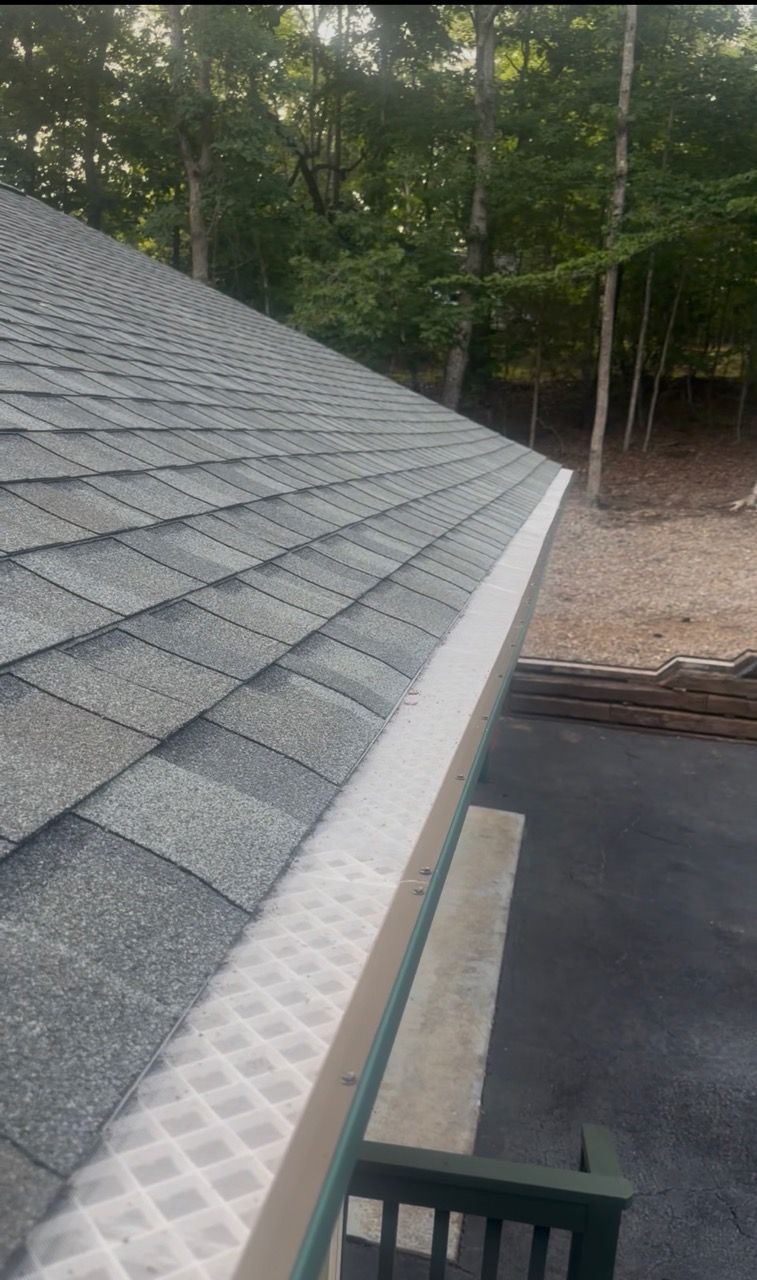
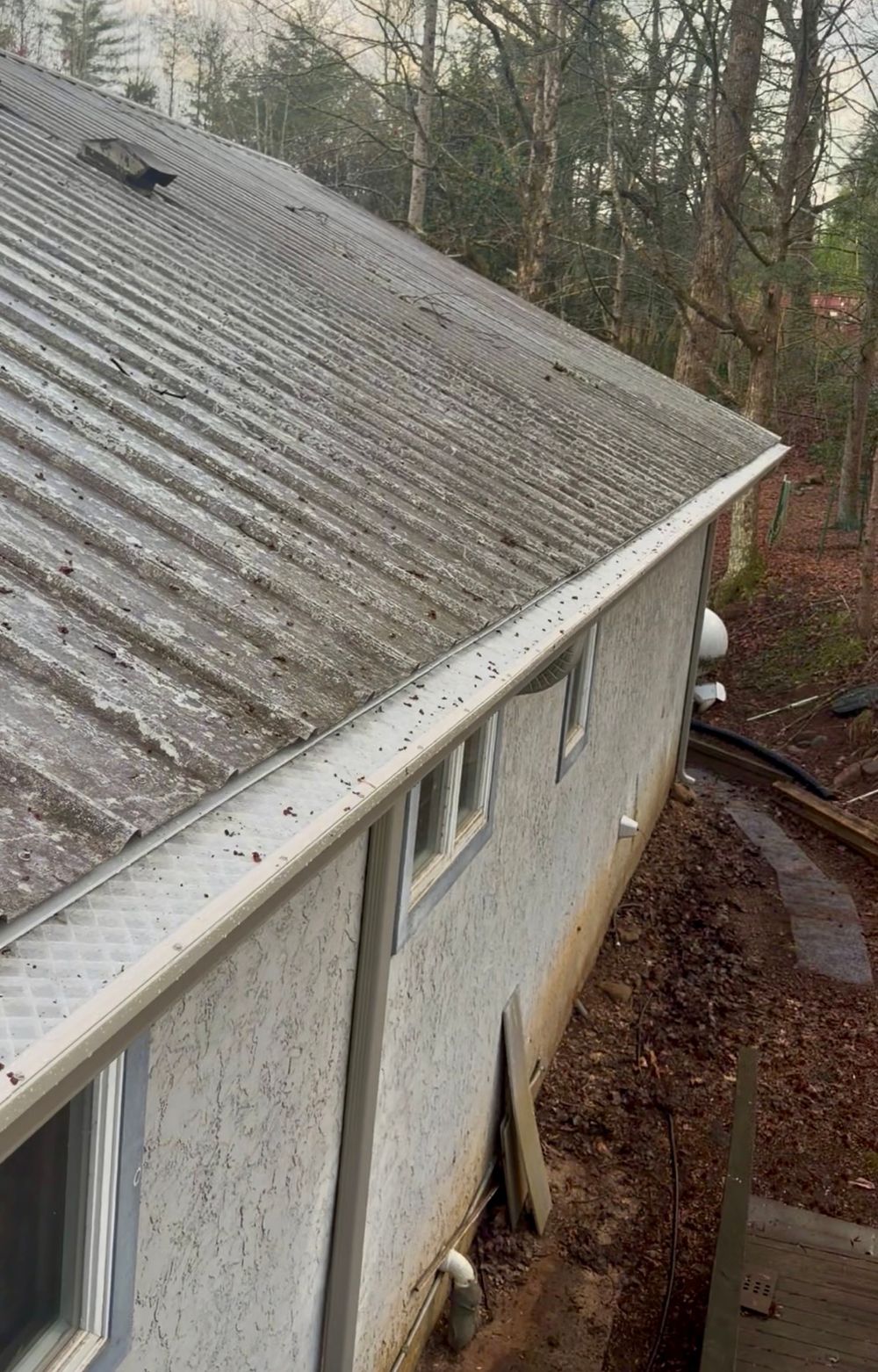
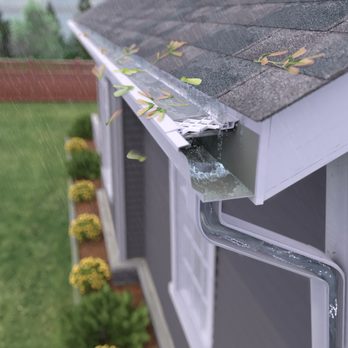
Every method on this page is a way to remove debris after it lands in the gutter. The only way to break the cycle is to keep the debris out in the first place. That's exactly what quality micromesh gutter guards do — they cap the gutter with a fine stainless screen so leaves and pine needles shed off the top while rainwater filters through.
On tree-heavy Upstate lots, that turns a two-to-four-times-a-year chore into an occasional wipe-down. No blower, no vacuum, no 40-foot pole — and LeafFilter's guards carry a lifetime, transferable no-clog warranty.
"The best ladderless gutter cleaning is the one you never have to do. Cap the gutter, and the debris never gets the chance to settle."
— Upstate LeafFilter