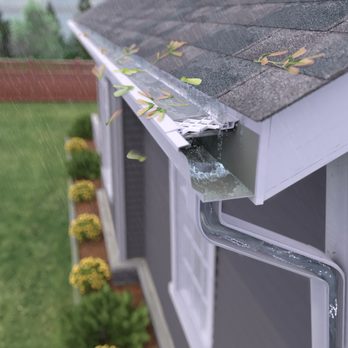
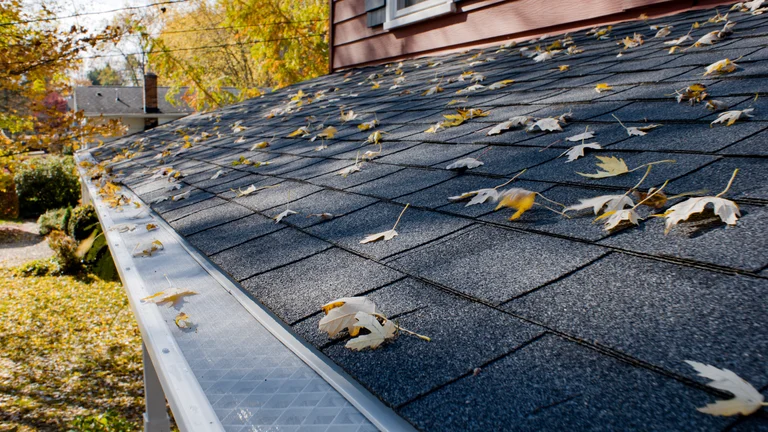
If you've heard scratching overhead, spotted twigs poking out of a gutter, or watched a squirrel disappear under your roofline, you've got a common Upstate problem. Between all the oaks and pines on our wooded lots in Greenville, Greer, Simpsonville and Easley, gutters full of packed debris look like prime real estate to a squirrel hunting for a warm, dry nest. Here's how to get squirrels out of your gutters humanely, clean up safely afterward, and make sure they don't come back.
Why squirrels nest in gutters in the first place
Squirrels aren't picking your gutters at random. As the weather cools, they look for insulated shelter to ride out the winter and raise young — and a gutter already packed with leaves, pine needles and twigs is basically a pre-built nest with a roof over it. From there, a gap in the fascia or soffit often becomes a doorway straight into your attic.
Three things make an Upstate home especially attractive:
- Easy access: oak and pine branches that touch or overhang the roof act as a bridge right to the gutter line.
- Ready-made shelter: clogged gutters full of debris are warm, dry and hidden — exactly what a nesting squirrel wants.
- Nearby food: bird feeders, open trash cans and grilling areas keep them close and comfortable.
In spring, gutters also double as birthing sites. A single female can raise litters of two to six young, and squirrels typically produce two litters a year — which is why a small problem multiplies quickly if you ignore it.
Signs squirrels have moved into your gutters
You don't always see the culprit. More often you notice the evidence. Watch for:
- Scratching or scrambling sounds along the roofline and gutters, usually in daylight when squirrels are active.
- Chew and gnaw marks on gutter edges, soffits, fascia and roof trim — squirrels chew constantly to file their teeth.
- Compact nests of leaves and twigs tucked into a warm, dry corner of the gutter or under a gutter guard.
- Droppings and food debris such as acorn shells collecting in the gutter or on the ground below.
- The humane fix is exclusion — let squirrels leave, then seal the opening. Don't trap and don't seal them in.
- In spring and late summer, check for babies first; sealing a nest with young inside is inhumane and creates a bigger mess.
- Treat droppings as a health hazard and clean up with gloves, or let a pro handle it.
- Prevention comes down to access, shelter and food — trim branches, keep gutters clear, and guard the openings.
How to get squirrels out of your gutters humanely
The goal isn't to harm the animal — it's to convince it to leave and then make sure it can't get back in. That approach, called exclusion, is both the most humane and by far the most effective long-term solution. Here's how to do it step by step.
1. Confirm the gutter is actually empty
Squirrels forage during the day, so mid-morning to midday is your best window to watch the entry point and confirm the animal has left. Look and listen before you touch anything — you never want to seal an opening with a squirrel still inside.
2. Encourage them to leave on their own
You can nudge a reluctant squirrel out by making the spot feel unsafe: a bright light aimed at the nest area, a talk-radio station left playing near the eave, or a rag dabbed with a strong scent like peppermint or cider vinegar placed nearby. Squirrels dislike disturbance and will usually relocate a nest that suddenly feels exposed.
3. Install a one-way exclusion door
If you can't be certain the gutter is empty, a one-way exclusion door (a hinged mesh flap over the opening) lets the squirrel push its way out but not climb back in. Leave it in place for a few days until you're confident everyone is gone.
4. Seal the entry point
Once the gutter and any roof gap are empty, close them up for good with metal flashing or hardware cloth — materials squirrels can't chew through. This is the step that actually ends the problem; without it, another squirrel simply moves into the same warm spot.
- Trapping stresses the animal and risks injury during handling.
- In spring and summer it can separate a mother from babies who can't survive alone.
- You catch one squirrel at a time while the open gutter keeps drawing new ones.
- Sealing the opening solves the whole problem instead of chasing individuals.
"Trapping one squirrel doesn't fix anything if the gutter is still an open invitation. Close the door, and the problem takes care of itself."
— Upstate LeafFilterWatch out for baby season
This is the one part you can't rush. If you find or hear baby squirrels in the gutter, stop. Sealing the opening with young inside traps them to die in your gutter — which is both inhumane and a far worse cleanup, complete with odor that pulls in flies and other pests.
In the Upstate, litters typically arrive in early spring and again in late summer. If babies are present, give the mother a few weeks to wean and move them herself, or call a licensed wildlife professional who can relocate the whole litter along with the mother. A little patience now saves a much bigger headache later.
Cleaning & disinfecting after they're gone
Once the gutter is empty and sealed, don't skip the cleanup — squirrel droppings and nesting debris can carry disease-causing bacteria, so treat them as a health hazard.
- Gear up: wear waterproof gloves and, ideally, a dust mask before you touch the nest or droppings.
- Remove the nest: scoop out all leaves, twigs and waste and bag it — don't just push it toward the downspout.
- Flush and disinfect: rinse the run with a hose and wipe contact surfaces with a disinfectant to kill lingering bacteria.
- Check the downspout: make sure nesting material hasn't packed into the elbow and blocked drainage.
If there was a heavy infestation, or you'd simply rather not handle the waste, it's worth hiring a pest-control professional to clean and sanitize it safely.
How to keep squirrels out of your gutters for good
Removal without prevention is a temporary win. To make sure the next squirrel doesn't move in, take away the three things that drew the first one — access, shelter and food.
Trim back the branches
Overhanging limbs are the on-ramp. Cut tree branches back at least six to eight feet from the roofline so squirrels can't leap across from your oaks and pines. On tightly wooded Greenville and Easley lots this one step does a lot of the work.
Keep the gutters clean and flowing
A clear, free-draining gutter has nothing to nest in. Clean out debris on a regular schedule and flush the system with a hose so it never becomes the warm, packed shelter squirrels look for.
Seal roof and soffit gaps
Close off any gaps around roof vents, chimneys, fascia and soffits with hardware cloth or metal flashing. If a squirrel can't turn your gutter into a doorway to the attic, it's far less interested in staying.
Secure the food supply
Keep bird feeders away from the house, use squirrel-resistant feeders, secure trash-can lids, and clean up crumbs around decks and grilling areas so the yard stops feeling like a buffet.
Guard the gutters and downspouts
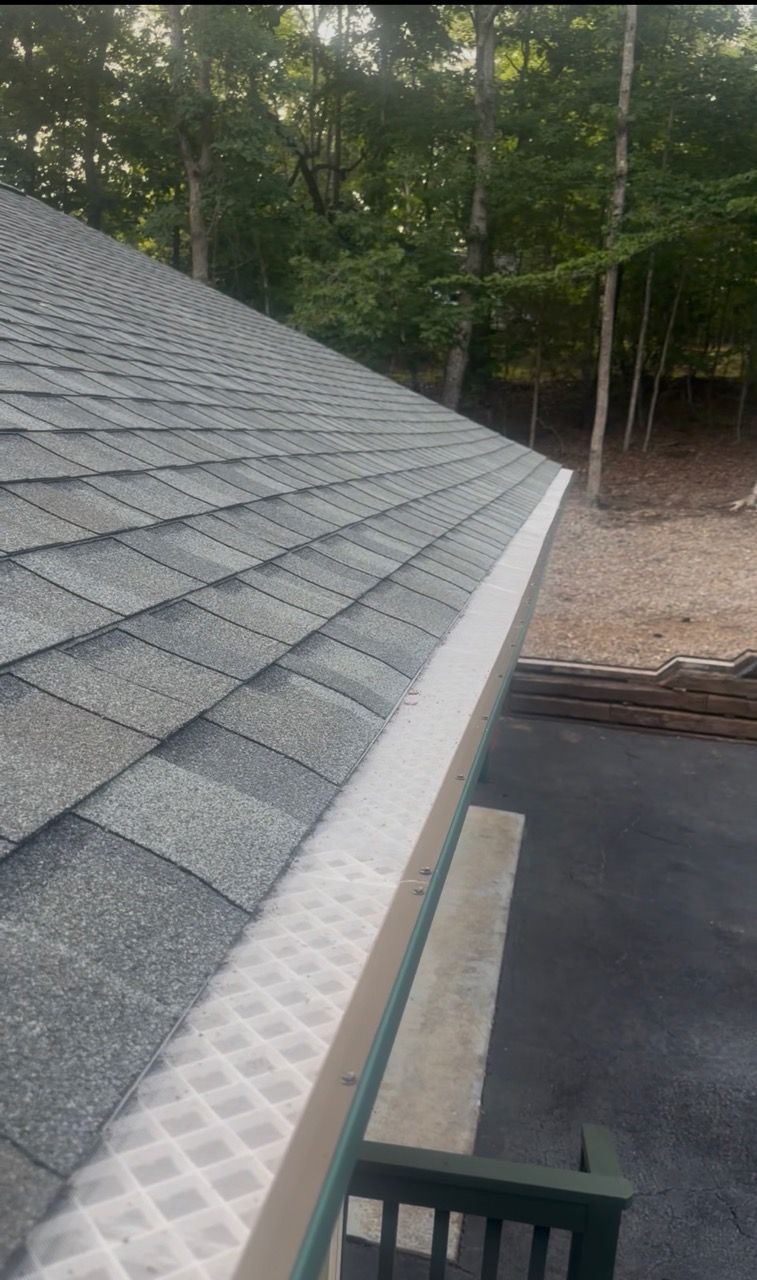
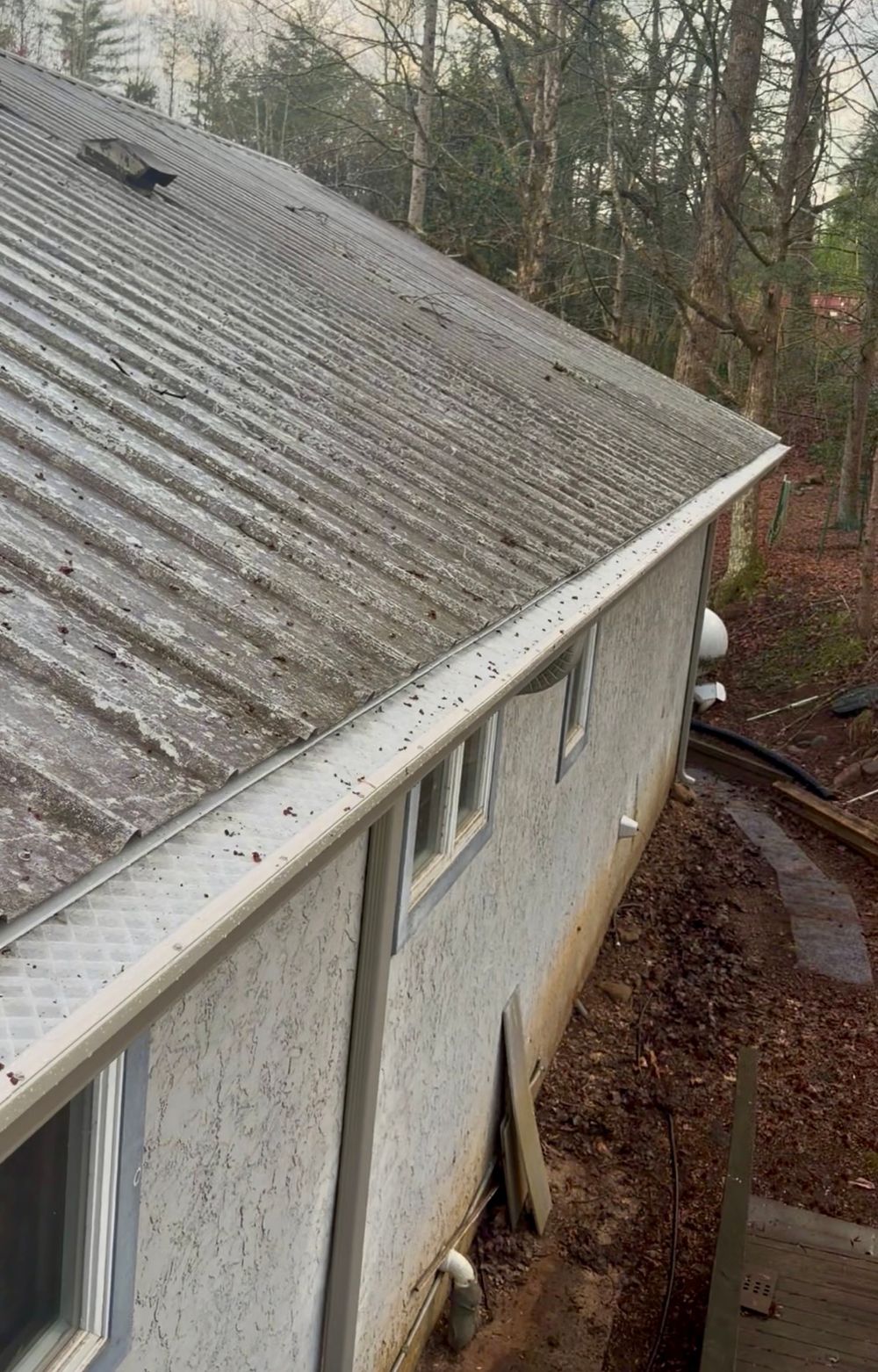
The most durable defense is closing off the gutter itself. Sturdy stainless-steel micromesh gutter guards cap the trough so there's no debris to nest in and no open channel to move into — and unlike flimsy plastic or foam inserts, squirrels can't chew through them when they're installed correctly with no gaps. Pairing guards with downspout guards seals the whole system.
Want a gutter squirrels can't move into?
We clear out the debris and cap your gutters with chew-proof stainless micromesh — no more nests, no more clogs. Get a free on-site quote locked in for 12 months.
When to call a pro or wildlife control
Some situations are worth handing off. Because one squirrel can become a dozen fast — two litters a year adds up — the best time to act is as soon as you notice them. Reach out for professional help when:
- There are babies in the nest and you need them relocated safely with the mother.
- Squirrels have chewed wiring in the roof or attic — a genuine fire risk that needs prompt attention.
- You've found water damage or rot where a clogged, nest-filled gutter has been overflowing.
- The gutter is on a steep or two-story run you can't reach safely from a ladder.
Licensed wildlife specialists handle the removal and hazardous cleanup, while a local gutter crew repairs the damaged run and installs guards so the problem doesn't come back. Between the two, you get a clean, sealed, squirrel-proof system.
"One squirrel this fall can be a whole family by next spring. The sooner you close off the gutter, the smaller the job stays."
— Upstate LeafFilterFrequently asked questions
Keep reading