It's the most reasonable question a Greenville homeowner can ask before spending real money on gutter protection: if I put guards on, do I still have to clean them? The honest answer isn't a flat yes or no — it depends almost entirely on which guard you choose. A quality micromesh system can turn gutter maintenance into a five-minute surface rinse a couple times a year. A cheap foam or screen insert can create a whole new mess of its own.
Here's the straight version, written for our tree-heavy corner of South Carolina — pines that shed year-round, oaks that dump leaves and acorns every fall, spring pollen, and the summer storms that blow it all onto your roof.
The short answer: drastically less, not zero
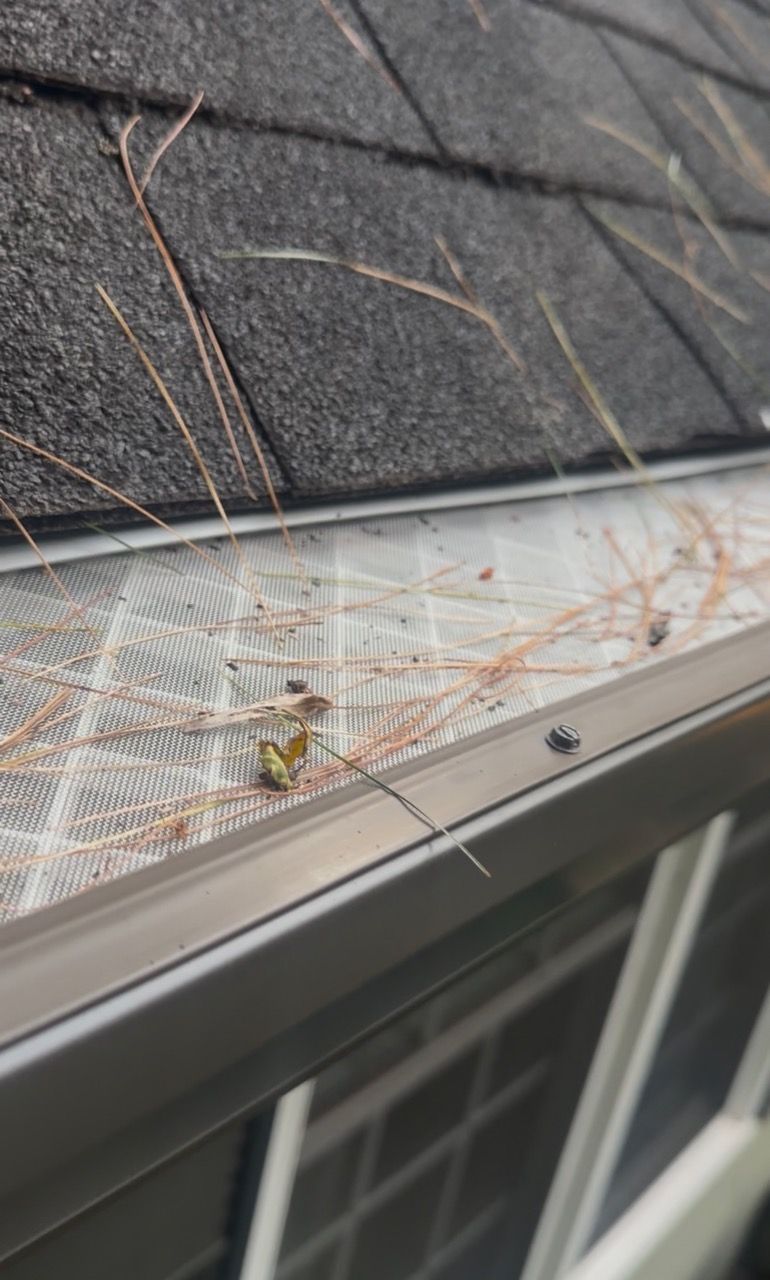
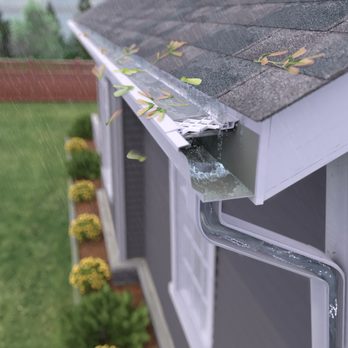
Good gutter guards dramatically reduce the cleaning your gutters need — they don't erase it. With fine micromesh, leaves and pine needles never make it into the trough, so you'll never again scoop out a wet, rotting sludge line. What you may occasionally do instead is brush or rinse a little surface debris off the top of the mesh. That's the whole difference: the dangerous, filthy part of the chore is gone; a light tidy-up remains.
- No gutter system is 100% maintenance-free — but quality guards get very close.
- Micromesh keeps debris on top, so cleaning becomes a surface rinse, not a scoop-out.
- Screen and foam guards often clog and can create more work, not less.
- Most Upstate homes only need a quick check once or twice a year with fine micromesh.
Why "100% maintenance-free" is a myth
Any company promising a gutter that never needs a single glance is overselling. In the Upstate especially, the sky delivers a steady supply of material: pine straw drifts down all year, oak leaves pile up in November, pollen coats everything in April, and storms shake loose whatever was clinging to the branches above your roof.
The realistic goal isn't zero maintenance — it's moving the maintenance from inside the gutter (hard, dirty, dangerous) to the surface of the guard (quick and low-risk). A well-designed guard does exactly that.
"The right question isn't whether guards need any attention — it's whether you'd rather rinse a surface for five minutes or spend a Saturday scooping muck off a ladder."
— Upstate LeafFilterCleaning by guard type: not all guards are equal
This is where most of the confusion comes from. "Gutter guards" covers wildly different products, and their maintenance stories couldn't be more different.
Micromesh
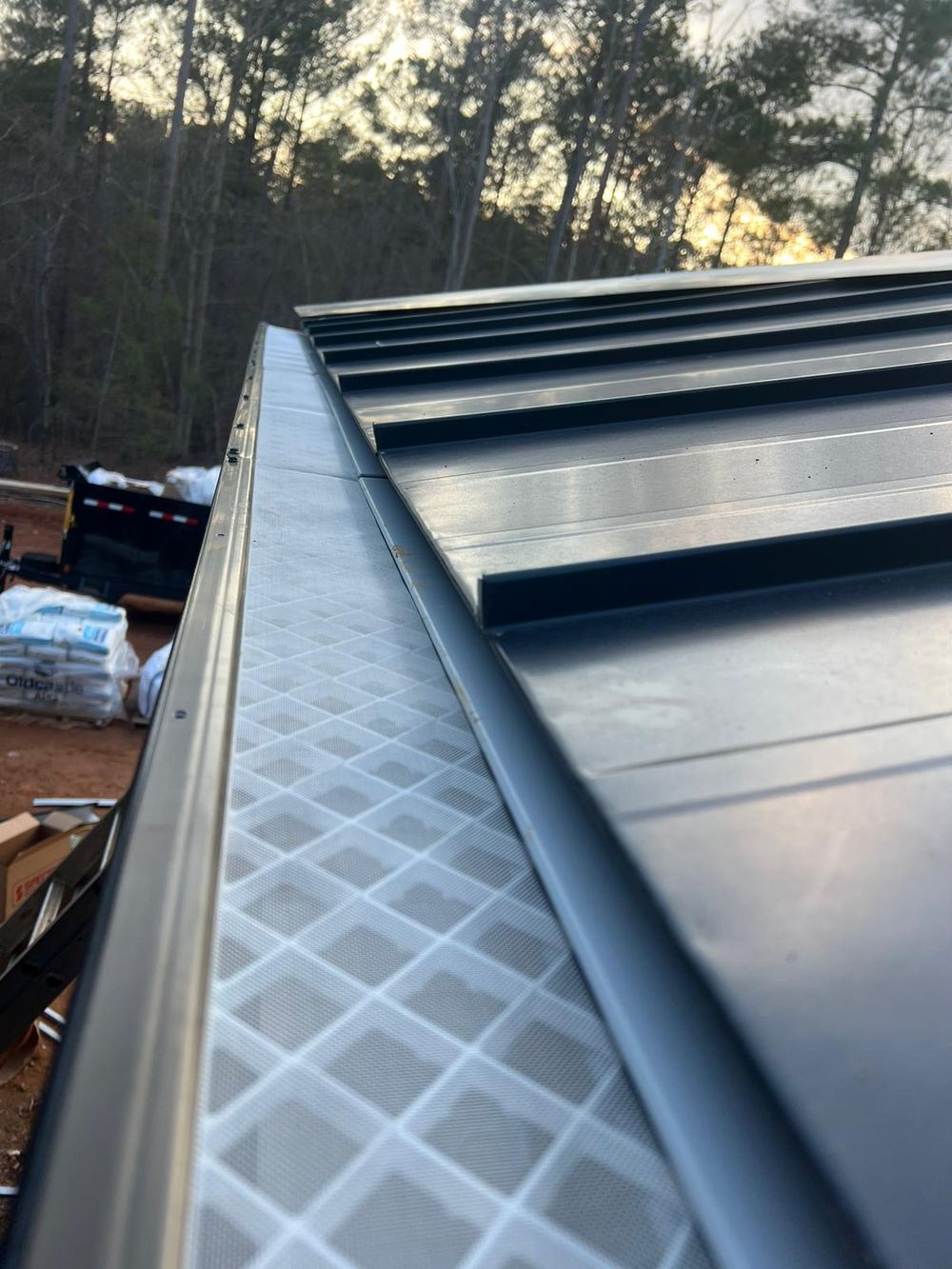
The tightly woven stainless mesh keeps out even fine grit and pine needles. Debris sits on top, dries, and mostly blows or washes away on its own. When it doesn't, a soft brush or hose handles it — nothing has to be removed. This is the lowest-maintenance category and the one we install.
Screen guards
Larger holes stop big leaves but let fine debris and shingle grit fall through and build up underneath. That means you sometimes have to lift the screens out to clean the gutter below — which partly defeats the point.
Foam & brush inserts
These sit inside the gutter and trap debris and moisture in the material itself. In our humidity they can hold water, grow gunk, and clog internally — often needing to be pulled out, rinsed, or outright replaced. Realistically, the highest-maintenance option.
- Micromesh: debris stays on top — surface rinse only, nothing to remove.
- Screens: fine debris slips underneath — occasional removal to clean below.
- Foam/brush: debris and moisture soak in — frequent pull-out, rinse or replace.

How often should you clean guards in the Upstate?
With quality micromesh, most Greenville-area homes need surprisingly little. Here's a realistic schedule for our region:
- Typical home: a light surface check once or twice a year is plenty.
- After fall leaf drop: glance at the mesh once the oaks in Easley and Simpsonville finish shedding.
- After pollen season: a quick spring rinse clears the yellow film that coats everything in April.
- Under heavy pines or after big storms: a fast look to knock off any surface pile-up.
Compare that to bare gutters, which many Upstate homes need cleaned three or four times a year, and the maintenance gap is obvious.
How to clean gutter guards safely
If your micromesh ever does need a hand, the job is simple — but do it gently. The mesh and its coating are what make the system work, so the goal is to clear the surface without scratching anything.
- Set up safely: a stable ladder with a stabilizer, gloves and eye protection.
- Brush first: sweep loose debris off with a soft-bristle brush — never a wire brush.
- Rinse gently: a garden hose from the farthest point toward the downspouts.
- Skip the pressure washer: high PSU can scratch mesh or lift the coating.
- Confirm flow: check that water actually reaches the ground at each downspout.
One safety note: if you have a two-story home, don't turn a five-minute rinse into a ladder accident. That's exactly the kind of visit we're happy to handle.
Want gutters you barely have to think about?
Fine micromesh keeps the pines and oaks out of your gutters for good — and turns cleaning into an occasional surface rinse. Get a free on-site quote locked in for 12 months.
How guard quality changes the whole equation
Here's the pattern we see every day across the Upstate: the more effective the guard, the less cleaning it demands. A loose screen or a foam insert has to be babysat because it lets the wrong things through. A tight, surface-tension micromesh keeps everything out of the trough in the first place, so there's simply less to do.
That's also why the cheapest guard is rarely the cheapest choice over time. If you're pulling out foam inserts twice a year, you've traded ladder-and-scoop for lift-and-rinse — not much of an upgrade. Quality is what actually buys back your weekends.
"A guard that keeps debris out of the gutter entirely doesn't just clean easier — it protects the fascia, the fasteners and the foundation behind it."
— Upstate LeafFilterWhere the no-clog warranty comes in
The last piece that changes the math is the guarantee behind the product. A quality micromesh system carries a lifetime, transferable no-clog warranty — meaning if the inside of your gutters ever clogs, it gets made right at no cost to you.
That's the real payoff of the "do guards need cleaning?" question. You may still wipe a bit of surface debris off the top now and then, but the messy, risky, water-damage part of gutter maintenance is off your plate — and backed in writing. For tree-heavy Greenville, Greer and Easley lots, that peace of mind is usually worth more than the small amount of surface upkeep that remains.
Frequently asked questions
Keep reading